Regulation · 8 min read
Is BellyFlush FDA Approved? 0 Supplements Are, and 1 Ruling From 2002
Short answer first: no. Then the part people miss, a 2002 rule about two of the ingredients.
BellyFlush is not FDA approved, and no dietary supplement is. FDA did publish one rule on 9 May 2002, effective 5 November 2002, moving aloe and cascara sagrada to category II for over-the-counter laxative use. It is not a ruling on this product.
Key facts
- Approval: BellyFlush is a dietary supplement. Not FDA approved, and nothing in the pack says otherwise.
- The 2002 rule: 67 FR 31125, published 9 May 2002, effective 5 November 2002.
- What it did: moved aloe and cascara sagrada to category II (nonmonograph) for OTC laxative use.
- Why: the lack of data and the failure to submit new carcinogenicity data. FDA had asked for data in 1998.
- Senna: stays an approved OTC laxative, with a Drug Facts label that says not longer than 1 week.
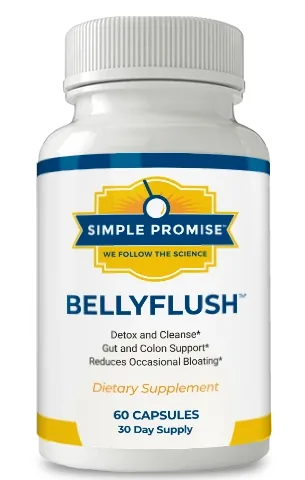
- FDA sentence on the bottle: the stars on the front point to it, but it is not on any artwork supplied.
Is BellyFlush FDA approved?
No. BellyFlush is sold as a dietary supplement, and supplements are not approved by FDA the way a prescription medicine is. No supplement on any shelf is FDA approved, so the phrase is not a mark of weakness here. It is a fact about the category.
What a buyer should look for instead is simple. Does the bottle carry a Supplement Facts panel? Does it carry the standard FDA statement? Does it name amounts, cautions and a limit on use? For BellyFlush the pack answers no to the first, cannot confirm the second and shows none of the third.
The footer of this site shows marks that were supplied with the pack, such as an FDA registered facility mark. This site cannot verify them, publishes no registration number, and does not treat any mark as an approval.
What did FDA rule about aloe and cascara in 2002?
On 9 May 2002, FDA published a final rule titled Status of Certain Additional Over-the-Counter Drug Category II and III Active Ingredients, at 67 FR 31125. It covers a list of ingredients that includes aloe, with aloe extract and aloe flower extract, and cascara sagrada.
The agency moved them to category II (nonmonograph). That means they should be deemed not generally recognized as safe and effective for over-the-counter use, before a final monograph is set. The rule took effect on 5 November 2002.
The reason given was the lack of data and information and the failure of interested persons to submit any new data from carcinogenicity studies. In 1998, FDA had asked for mutagenicity, genotoxicity and carcinogenicity data, and said these ingredients would move to category II if none came.
What does the 2002 rule not mean?
| Question | Answer | Note |
|---|---|---|
| Does it ban aloe or cascara? | No | It concerns over-the-counter laxative drugs |
| Does it make them unlawful as supplement ingredients? | No | This site does not say that it does |
| Did FDA find them to cause cancer? | No | The studies were not submitted |
| Is it a ruling about BellyFlush? | No | It is about the two ingredients in OTC drug use |
| Has anything changed since? | Not found | Nothing in the sources this site opened |
Read the rule as what it is: a regulator looked for safety data on two ingredients in one use, found none, and said so. It is useful background. It is not a verdict on a capsule that did not exist in 2002.
What about senna, the third ingredient?
Senna was not moved. It remains an approved over-the-counter laxative, which means it has a full label. A current US senna Drug Facts box lists sennosides 8.6 mg in each tablet, gives the purpose as laxative and warns: do not use laxative products for longer than 1 week, unless directed by a doctor. It also says to stop and ask a doctor for rectal bleeding or for no bowel movement after use.
BellyFlush is not that drug, and the label is not its label. But it shows what a regulated product in the same class tells its buyer. This product tells the buyer none of it.
Read the terms next to the facts
The pricing page lists three packs and the 365-day guarantee. The safety page holds the 2002 rule in full.
See today's price and guarantee
If you buy through a link on this site, it may earn a commission from the order desk. That changes nothing about what is printed here.
What should a supplement label carry instead of approval?
Under 21 CFR 101.36, a supplement offered for sale shall bear nutrition labeling, shown as a Supplement Facts panel with serving size, amounts and, for blends, a total. The front of the BellyFlush bottle carries starred claims, and the star points to a sentence saying FDA has not evaluated the statements and that the product is not meant to diagnose, treat, cure or prevent any disease.
That sentence is not in the pack. This site's disclaimer page prints it in full, so you can read it here. If it is on your bottle, good. If it is not, tell us.
The three starred claims are Detox and Cleanse, Gut and Colon Support and Reduces Occasional Bloating.
How should you read all this when you buy?
Start with the right question. Not, is it FDA approved, but does the label tell me what I am taking, how much and for how long? On those three points this product, as supplied, tells you very little.
- Ask for the Supplement Facts panel before you pay.
- Ask the sennoside content, in milligrams.
- Ask how many nights it is meant to be taken for.
- Get the answers in writing.
- Talk to a pharmacist if you take any daily medicine.
None of these needs a regulator. They need a phone call.
Where does this page get its facts?
The 2002 rule is quoted from the Federal Register notice. The senna label is a current DailyMed Drug Facts box. The label rule is 21 CFR 101.36.
- Status of Certain Additional Over-the-Counter Drug Category II and III Active Ingredients, final rule, 67 FR 31125, U.S. Food and Drug Administration / Federal Register, May 9, 2002.
- SENNA LAXATIVE tablet, Drug Facts label, DailyMed, U.S. National Library of Medicine.
- 21 CFR 101.36, Nutrition labeling of dietary supplements, U.S. Electronic Code of Federal Regulations.
- Aloe Vera: Usefulness and Safety, NIH National Center for Complementary and Integrative Health (NCCIH).
More on this site: pricing, the label, safety, how to take it and the FAQ.
Frequently asked questions
Is BellyFlush FDA approved?
No. It is a dietary supplement, and no dietary supplement is FDA approved. The pack says nothing to the contrary.
Did FDA ban the ingredients in BellyFlush?
No. A final rule of 9 May 2002 moved aloe and cascara sagrada to category II for over-the-counter laxative drug use. Supplements are outside that rule.
When did the 2002 FDA rule take effect?
5 November 2002. It was published on 9 May 2002 at 67 FR 31125.
Why did FDA move aloe and cascara to category II?
Because of the lack of data and the failure of interested persons to submit new carcinogenicity data that FDA had asked for in 1998.
Is senna approved by FDA?
Senna remains an approved over-the-counter laxative. Its label says do not use laxative products for longer than 1 week, unless directed by a doctor.
Does BellyFlush carry the FDA disclaimer?
Not published. The front has three starred claims, and the sentence they point to is not on any artwork supplied. This site's disclaimer page prints it.
Our view
Is BellyFlush FDA approved? No, and that is true of every supplement. Do not let anyone sell you comfort or alarm on that point. The better test is what the label tells you.
The 2002 rule is worth knowing, since it covers two of the first three ingredients. It does not condemn the product and it does not clear it. It says a regulator once asked for safety data and got none.
BellyFlush is a dietary supplement. It does not treat, cure or prevent any disease. Take your medical questions to a doctor, and ask a pharmacist about any medicine you already take.
Ask for the label before you order
If you buy, the order desk is on +1 (800) 390-6035. The pricing page shows the packs.
See today's price and guarantee
If you buy through a link on this site, it may earn a commission from the order desk. That changes nothing about what is printed here.
Last updated . The 2002 rule concerns over-the-counter drug use of two ingredients, not this product.